

Mar 06,2026
Aluminum Honeycomb Panels: Lightweight, Strong, and Versatile Architectural and Industrial Material
Get Quote NowAluminum honeycomb panels are advanced composite materials widely used in modern architecture, transportation, aerospace, and industrial manufacturing. Known for their lightweight structure, high strength, and excellent durability, these panels provide an ideal solution for applications where structural performance, aesthetics, and efficiency are equally important. Their unique honeycomb core structure allows them to achieve remarkable rigidity while maintaining a significantly lower weight compared to traditional solid materials.
Structure and Composition
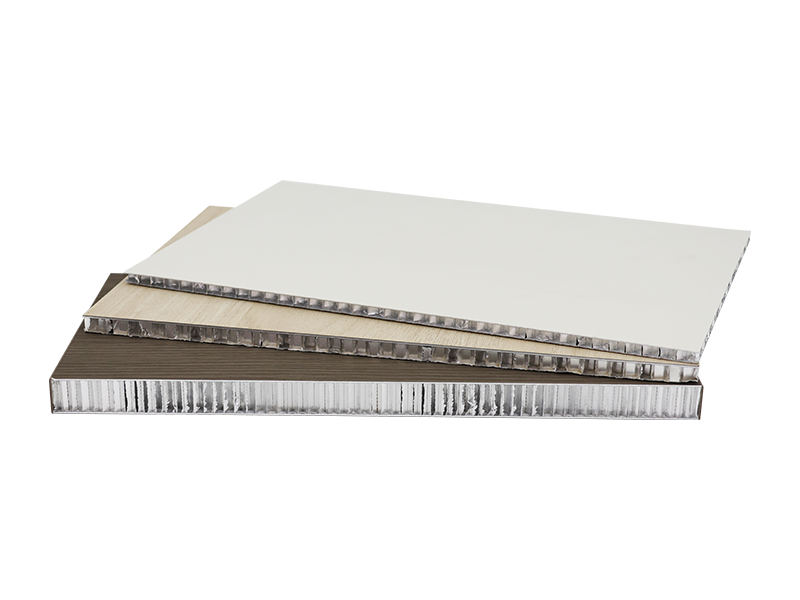
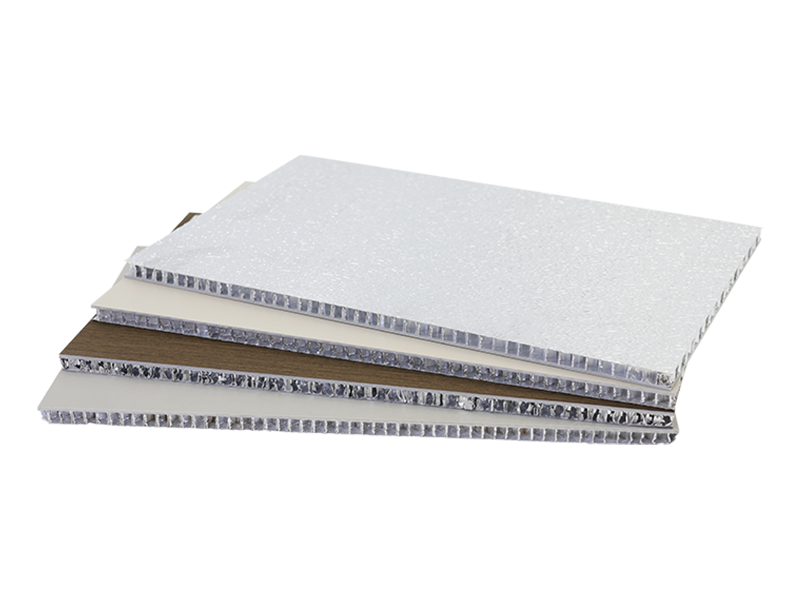
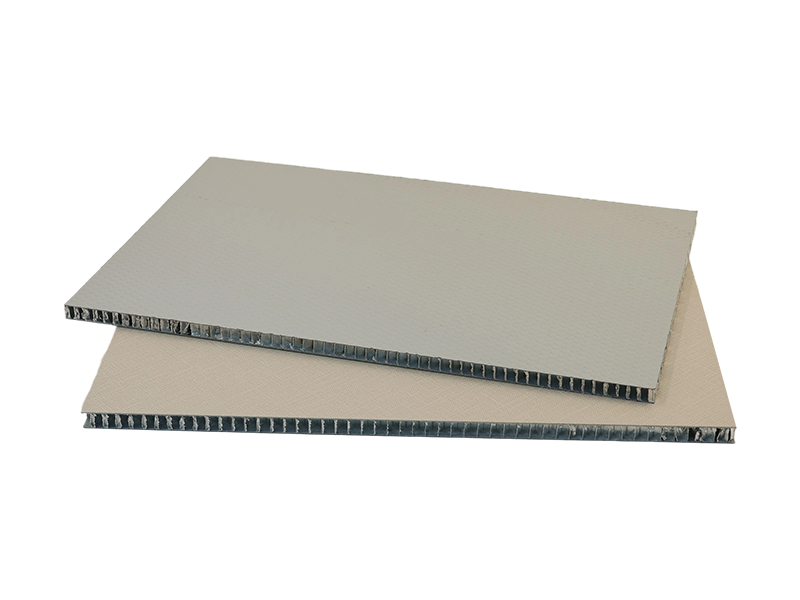
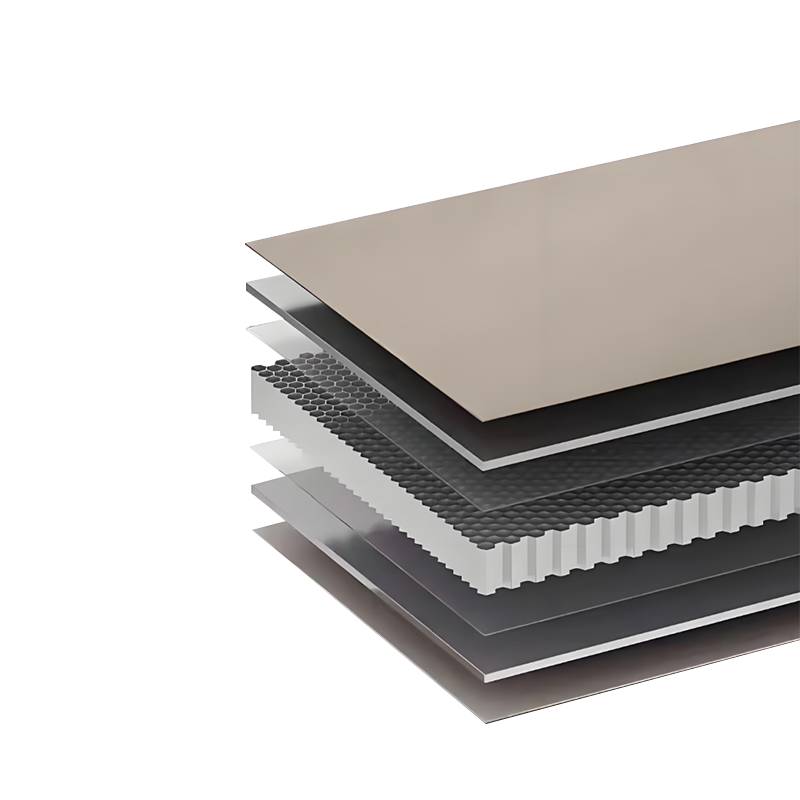
Aluminum honeycomb panels typically consist of three main layers: two outer aluminum sheets and a core made of aluminum honeycomb cells. The honeycomb core is formed by bonding thin aluminum foils together in a hexagonal structure, similar to the natural honeycomb pattern created by bees. This geometric configuration distributes loads evenly across the panel and provides exceptional mechanical strength.
The outer aluminum sheets act as protective and decorative surfaces, while the honeycomb core serves as the structural support layer. The three layers are bonded together using high-performance adhesives under controlled temperature and pressure. This manufacturing process ensures a strong, stable composite panel that maintains excellent flatness and dimensional stability.
Key Advantages
One of the most significant advantages of aluminum honeycomb panels is their extremely high strength-to-weight ratio. The honeycomb core design reduces the amount of material required while still maintaining excellent structural performance. As a result, the panels are much lighter than traditional solid aluminum or steel sheets of similar size and strength.
Another important benefit is outstanding rigidity. The honeycomb structure provides strong resistance to bending and deformation, making the panels ideal for large surface installations such as curtain walls and ceilings. Even with large dimensions, aluminum honeycomb panels remain flat and stable without sagging.
Aluminum honeycomb panels also offer excellent corrosion resistance. Aluminum naturally forms a protective oxide layer that prevents rust and degradation. When combined with protective surface coatings such as PVDF, polyester, or anodized finishes, the panels can withstand harsh outdoor environments for many years without significant deterioration.
Thermal insulation and sound insulation are additional advantages. The honeycomb core traps air within its hexagonal cells, which helps reduce heat transfer and improves acoustic performance. This makes aluminum honeycomb panels suitable for buildings where energy efficiency and noise control are important considerations.
Surface Finishes and Customization
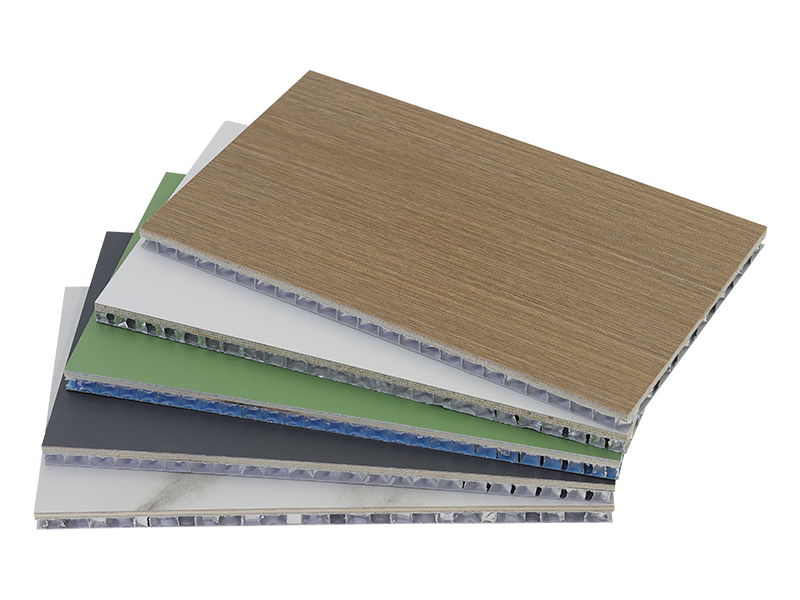
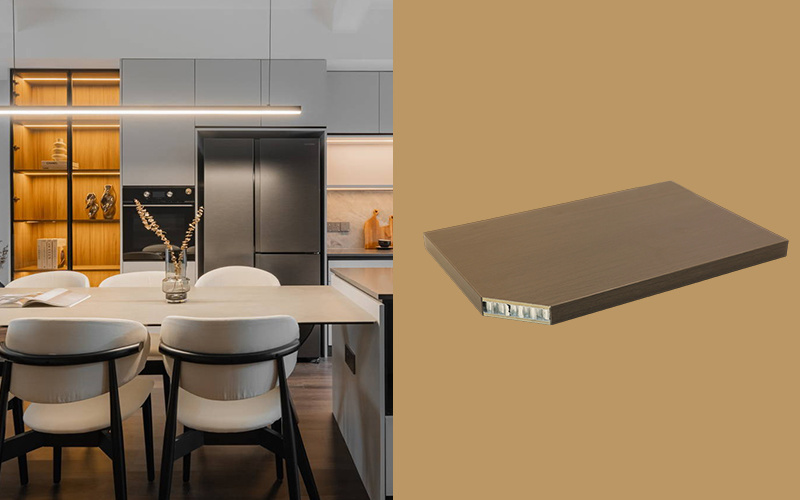
Aluminum honeycomb panels are highly customizable in terms of appearance and surface treatment. Various coating technologies allow manufacturers to produce panels in a wide range of colors, textures, and finishes. Common surface treatments include PVDF coating, powder coating, anodizing, brushed aluminum finish, and wood grain transfer printing.
These finishing options allow designers and architects to create visually appealing building facades and interior spaces. Panels can also be fabricated into curved shapes, perforated designs, or special patterns to meet unique architectural requirements.
Applications in Architecture
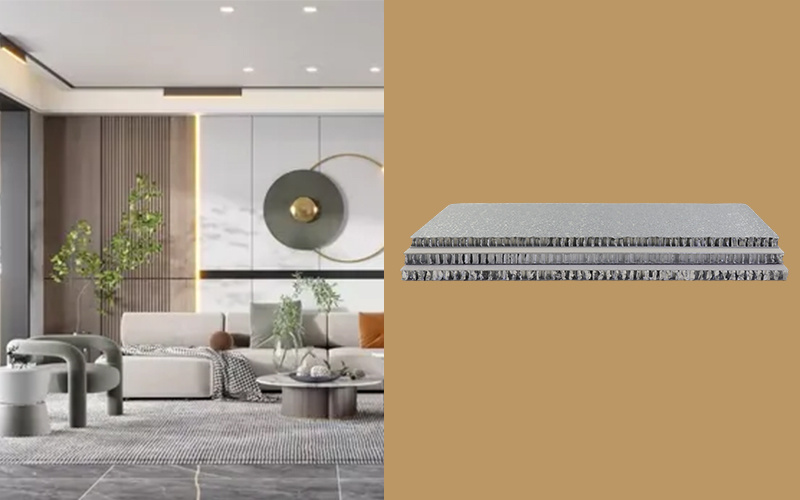
In the construction industry, aluminum honeycomb panels are widely used for exterior curtain walls, building facades, ceilings, partitions, and interior decorative walls. Their lightweight properties reduce the structural load on buildings, while their strength ensures long-term durability.
They are especially popular in large public buildings such as airports, railway stations, shopping malls, exhibition centers, and office complexes. The panels provide a modern appearance, easy installation, and excellent weather resistance, making them a preferred material for contemporary architectural design.
Applications in Transportation and Industry
Beyond architecture, aluminum honeycomb panels are extensively used in transportation industries. They are commonly applied in train interiors, shipbuilding, automotive components, and aircraft structures. Their lightweight nature helps reduce overall vehicle weight, improving fuel efficiency and operational performance.
In industrial applications, aluminum honeycomb panels are used in clean rooms, machinery enclosures, elevator interiors, and partition systems. Their combination of strength, corrosion resistance, and easy maintenance makes them highly suitable for demanding environments.
Fire Safety and Environmental Benefits
Modern aluminum honeycomb panels can also be manufactured with fire-resistant properties. The aluminum material itself is non-combustible, and specialized core treatments and coatings can further improve fire performance. This makes the panels suitable for projects that require compliance with strict fire safety standards.
In addition, aluminum honeycomb panels are considered environmentally friendly. Aluminum is fully recyclable, and the lightweight structure reduces material consumption during production and transportation. These characteristics contribute to sustainable construction practices and lower environmental impact.
Installation and Maintenance
Installation of aluminum honeycomb panels is relatively simple compared to many traditional construction materials. Panels can be prefabricated to precise dimensions and installed using mechanical fixing systems such as aluminum frames, brackets, and concealed fasteners.
Maintenance requirements are minimal. The smooth surface coatings resist dust accumulation and staining, allowing the panels to be easily cleaned with water or mild detergents. This low maintenance requirement makes them an economical choice for long-term building applications.
Conclusion
Aluminum honeycomb panels represent a perfect combination of strength, lightweight performance, durability, and aesthetic flexibility. Their advanced composite structure allows them to meet the demands of modern architecture, transportation, and industrial design. With excellent corrosion resistance, thermal insulation properties, and customizable finishes, aluminum honeycomb panels have become one of the most widely used materials in contemporary engineering and construction.
As technology continues to advance and demand for efficient materials increases, aluminum honeycomb panels will continue to play an important role in sustainable building solutions and high-performance industrial applications.
Related News



Contact Us
Email: gzln01@gzln-buildingmaterials.com
Tel / Whatsapp: +86 19926019345
Factory Address:No. 1, Chuangye West Road, Hengchuang Industrial Park, Zhongxin Town, Zengcheng District, Guangzhou City, Guangdong Province, China
Online Message
Distributor Following
Welcome same-minded global partners to expand your local market together!
You need to meet the following conditions:
1. Some experience in the Building Materials Industry
2. There are certain sales channels available
3.Love and decide to explore the local market together
Whatsapp: +86 19926019345
Welcome to leave a message!